Frequently Asked Questions
Theres a lot to learn when adapting to new technology – if your question isn’t answered here, please send us a message!
getting started
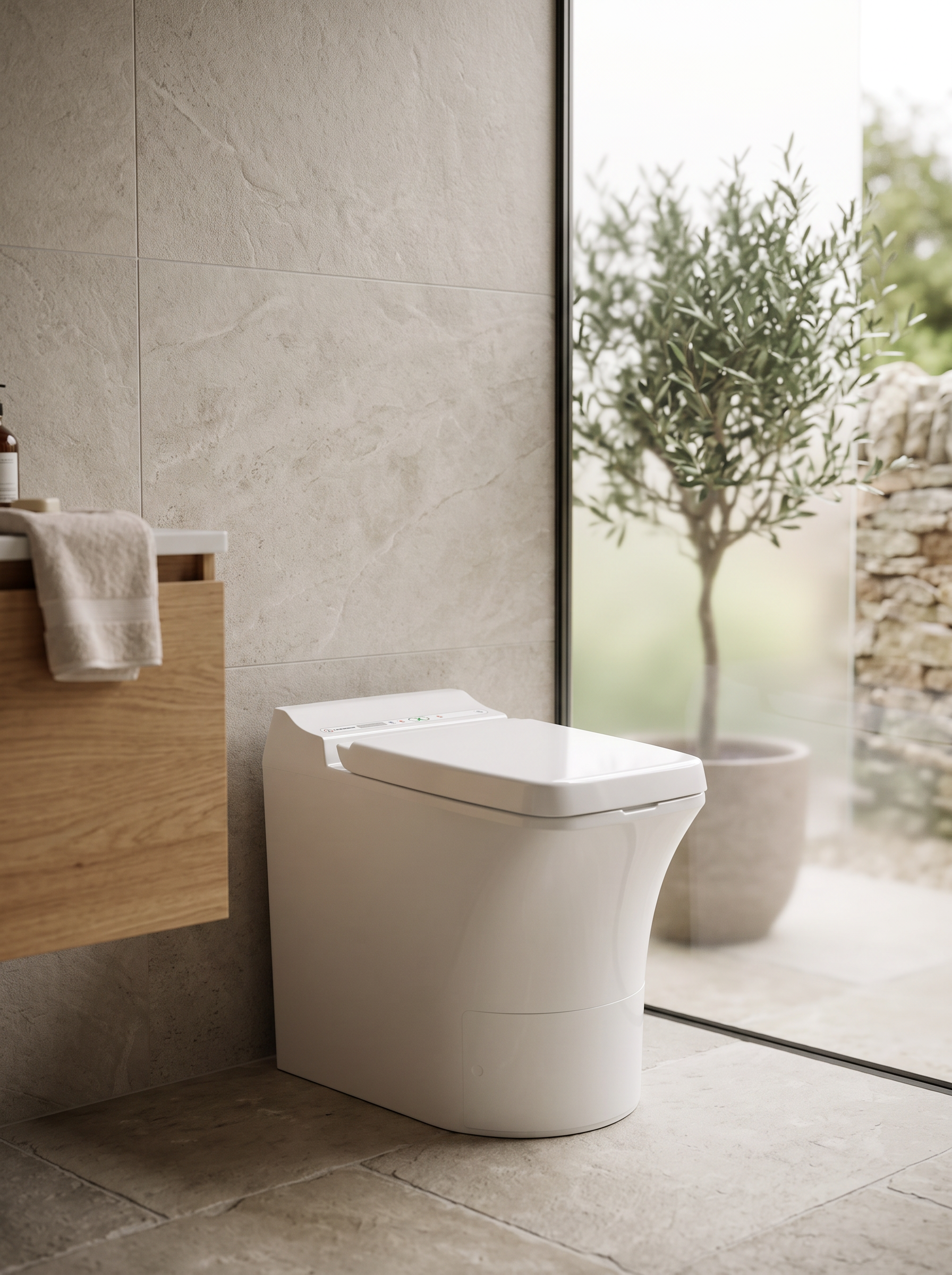
What is an Incineration Toilet?
An incineration toilet burns biological waste at high temperatures, leaving only an insignificant quantity of ash, amounting to the equivalent of about one teacup for four people during one week of use. Waste is burned in an enclosed incineration chamber, and the gases from the process are expelled through a separate ventilation pipe. Incineration toilets are a complete waste solution, in that they get rid of all waste at once, without having to be collected and transported elsewhere.
Most other toilet systems on the market require that the user transports the end waste to a suitable deposit, but with the Cinderella Incineration Toilet, the odourless and hygienic solution ends up as biodegradable ash, perfect for fertilising our gardens. Incineration toilets are a popular alternative for toilet installations even in the most remote areas, since the solution does not require a water supply or a costly drainage solution. Cinderella offers several types of incineration toilets using both electricity, diesel and gas as sources of energy.
essential questions, capacity & specs
Getting Started &
General Information
Do I need water or sewerage connection for Cinderella?
No, Cinderella incineration toilets do not require connection to water or sewerage. The toilet is a water free toilet solution.
Can capacity be increased for large groups?
Yes. Adding a Cinderella Urinal handles liquid waste (4 out of 5 visits are for urination), significantly increasing overall capacity while reducing power, gas, and liner consumption.
How durable are the incineration toilets, and how do they handle Australian conditions?
Cinderella toilets have been on the market for over 25 years with more than 100,000 units sold globally. They are heavily used in demanding environments like Australian mining sites.
“What is the longevity of an incineration toilet?”
The Cinderella Incineration Toilet has been on the market for over 25 years, with more than 50,000 units sold worldwide. Its long-standing presence and widespread adoption are a testament to its durability and reliability.
How many people can use the toilet?
The toilet handles up to 4 visits per hour. Opening the lid pauses the incineration cycle immediately so the next person can use it without waiting for the full cycle (around 50-70 minutes) to finish.
Is urine diverted like in a composting toilet?
No, unlike composting toilets that often separate urine, the Cinderella Comfort incinerates both urine and faeces together. During the incineration process, urine evaporates completely, leaving behind only a small amount of sterile ash.
How long does an incineration cycle last?
Usually 50-70 minutes. Note that incineration time may vary depending on the amount of waste (up to 180 minutes since the last visit).
usage operations
How long does the next person have to wait before the toilet can be used again?
A typical incineration cycle takes about 1 hour, but fortunately, the next person doesn’t have to wait that long before they can use the toilet.
Our toilet has the capacity to handle up to 4 visits per hour. When the lid is opened, the incineration process stops immediately, and it does not restart until the start button is pressed again. This provides flexibility and allows more people to use the toilet within an hour without having to wait.
If many people are going to use the incineration toilet, it may be wise to consider installing a Cinderella Urinal, which is designed for urination.
Proper usage, flush requirements, and child safety
Daily Operation & Safety
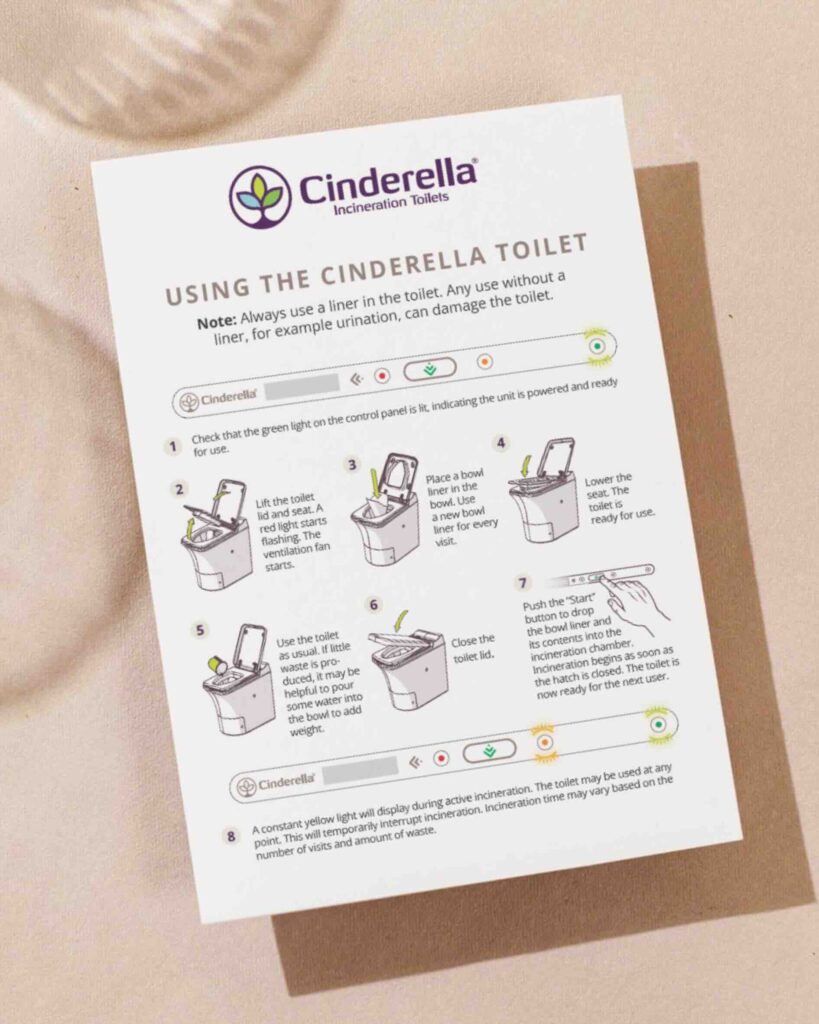
What are the steps for using the toilet?
1. Lift the lid and seat.
2. Place an original bowl liner in the bowl.
3. Lower the seat and use the toilet as usual.
4. Close the lid and press the start button.
Do I have to “flush” (press start) after every use?
Yes. Even for urination only. Leaving waste in the liner allows moisture to soak through, sticking the liner to the bowl and causing unpleasant odours.
Is the toilet safe for children?
Yes. It complies with strict safety regulations and is used in family homes and kindergartens in Norway.
Is the toilet noisy or smelly?
No, the toilet is designed to operate odour-free. When the lid is lifted, a built-in fan automatically starts and continues to run:
- From the moment the lid is opened
- Throughout the entire incineration process
- Until the toilet has cooled down to ambient temperature
This continuous airflow ensures that odours are effectively extracted and vented outside, keeping the indoor environment fresh and comfortable.
The fan’s noise level is comparable to that of a standard domestic refrigerator – quiet and unobtrusive in most settings.
Do I need to use a liner every time?
Yes, a liner must be used for every single use of the Cinderella Comfort toilet. Using the toilet without a liner can lead to rapid deterioration of internal components, and any resulting damage will not be covered under the warranty.
Can I turn off the toilet after waste drops into the incineration chamber?
No. Always allow the full incineration cycle to finish. Unburned waste left inside causes corrosion, odours, and voided warranties.
Does the seat have a soft-close lid?
No, it does not.
Can I Use a Bidet with the Cinderella Comfort Toilet?
No, the Cinderella Comfort is not compatible with bidet attachments or water-based cleaning systems. However, biodegradable wet wipes can be safely used and incinerated after use, offering a hygienic alternative.
Where do I get liners from?
You can purchase genuine liners from our authorised dealers. Follow the link to find the closest dealer to you.
operations
How Does It Work?
After a toilet visit, the user will close the lid and press the start button and an incineration cycle is activated in the incineration chamber, which is built into the toilet unit. This chamber heats up and reduces the waste to a small amount of clean ash. This eliminates the need for a septic tank or sewage system, making Cinderella an ideal toilet solution for cabins, sheds, holiday homes, site offices, and tiny homes.
Watch our YouTube video to see how easy the toilet is to use. Click link below to learn more about the Cinderella Toilet.
POWER CONSUMPTION, DIY SETUP, AND ENERGY TIPS
Installation, Power &
Off-Grid Setup
How do I install my new Cinderella?
Installing a Cinderella is easy and requires no external tanks or the use of water and sewage. A ventilation system for air in/out must be installed, following our recommendations for reliable operation and a long lifespan.
It is essential to thoroughly read the installation manual that comes with the toilet. Incorrect installation can lead to malfunctions, wear, or odours and will void the warranty.
Before installation, we recommend familiarising yourself with the applicable local regulations in the country where you plan to install the toilet.
Read our best installation tips here.
Can I install the toilet myself?
Yes. Any handy person can complete the installation using the included manual and video guides. Ensure you follow ventilation guidelines and local regulations.
Can the Cinderella Comfort run on an off-grid solar system?
As a general guide, your setup requires at least 2 kW of solar capacity and 2 kW of battery storage per person, per toilet use to handle the incineration cycles. It’s essential to consult with a solar/battery specialist to ensure your setup is properly sized for reliable performance.
How much electricity does the Cinderella Comfort use?
The Cinderella Comfort uses approximately 1.41 to 1.6 kWh of electricity per incineration cycle. Each cycle lasts around 50 minutes, depending on the amount of waste and operating conditions. This energy usage is comparable to running a standard household appliance for about an hour.
Are there ways to save energy?
One practical way to reduce power consumption is to limit liquid waste going into the toilet. For example, if the team opts to ‘water the lemon tree’ instead, it can significantly cut down on the number of incineration cycles required – saving both energy and wear on the system.
how to
Installation Guide
Installing your Cinderella Incineration Toilet is a clean and straightforward process that requires no water or complex plumbing. Watch the video above for a step-by-step visual overview on positioning the unit, securing the closed-loop ventilation pipes, and connecting the electrical supply safely to ensure optimal performance and airflow.
routine care schedules & cleaning methods
Maintenance & Cleaning
How often should I empty the ash, and is it safe?
Empty the ash pan once a week for light use (under 10 uses/day) or twice a week for heavy use. The resulting ash is completely sterile and safe to scatter in gardens or add to compost.
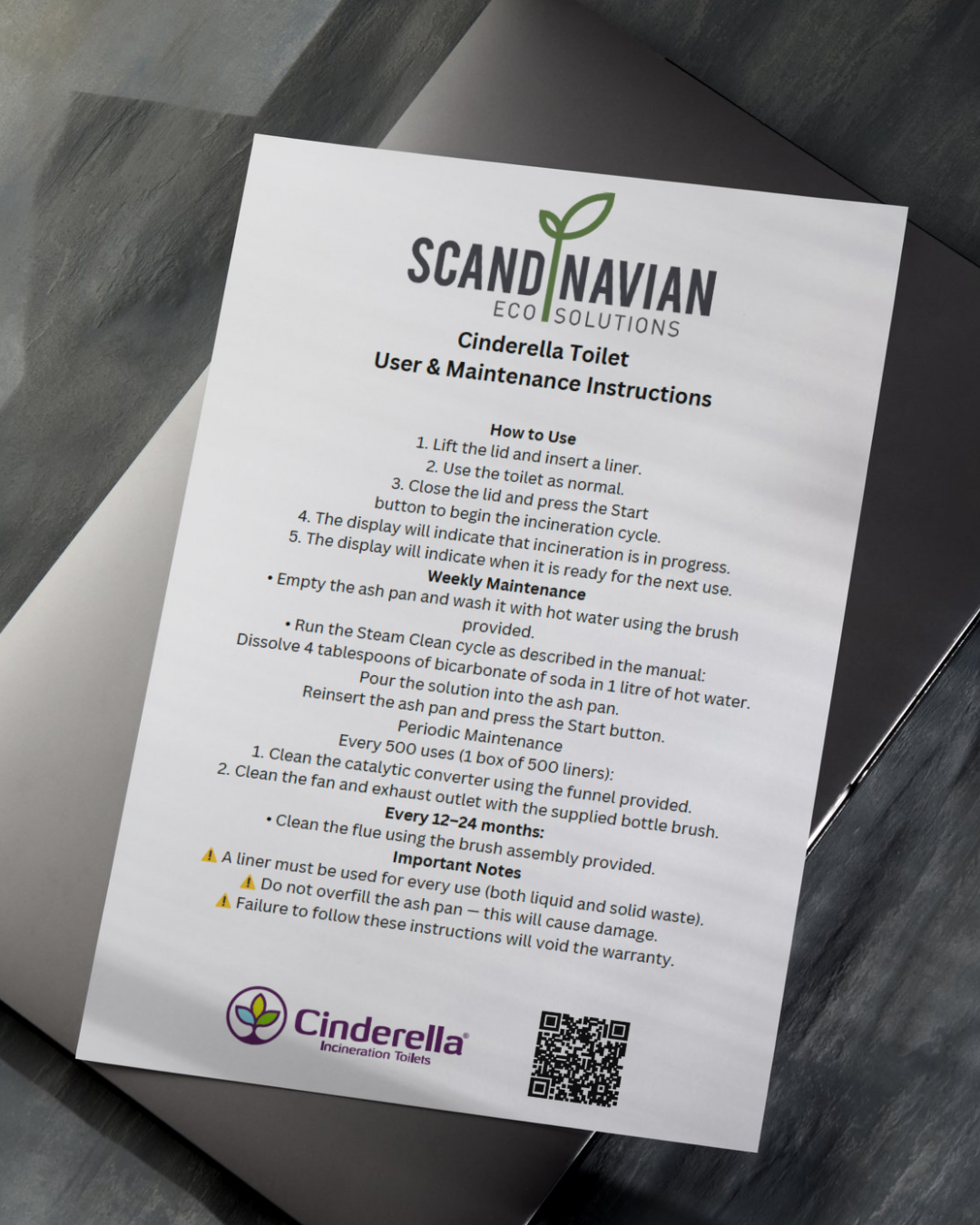
What is the full recommended maintenance schedule?
Weekly: Empty/clean ash container and run a steam clean cycle.
Every 500 uses: Clean the exhaust connection and backwash/flush the catalyst.
Every 12 months: Clean the main pipe and ventilation pipe.
Read more here
“Can I use the ash in my garden?”
Yes, the ash produced by the Cinderella incineration toilet is completely sterile. It can be safely scattered in your garden, added to a compost bin, or disposed of in a regular waste bin.
How do I steam clean the toilet?
We recommend dissolving 4 tablespoons of bicarbonate soda into 1 litres of hot water, pour it into the ash pan insert, place it in the toilet, close the lid, and press start to run a cleaning cycle. Do not use the toilet during this process.
Can I empty the ash pan while the toilet is incinerating?
No, the ash pan must not be removed during the incineration process. It can only be safely removed once the toilet has fully cooled down to ambient temperature.
The LCD display will guide you through this:
- During cooling, it will indicate that the toilet is in the cool-down phase
- Once the display reads “Ready to Use,” the ash pan can be safely removed and emptied
What cleaning products should I use on the bowl?
Use a soft cloth, moist paper, water, or mild natural agents like vinegar and bicarbonate soda.
operations
What is the maintenance schedule?
To maintain optimal performance, extend system lifespan, and preserve your warranty, follow these primary maintenance practices:
Weekly Maintenance
- Empty and clean the ash container.
- Steam clean: Use a solution of 1 liter of hot water mixed with 4 tablespoons of bicarbonate soda. This helps remove residue and maintain hygiene.
Scheduled Maintenance
After 500 uses (approximately one box of liners):
- Cleaning the toilet’s exhaust connection – Prevents buildup and ensures proper airflow.
- Backwashing the catalyst – Restores effectiveness and maintains odour control.
Once a year (or more frequently if the toilet is used in a year-round residence):
- Cleaning the pipe and ventilation pipe – removes accumulated debris and maintains optimal ventilation.
what can be incinerated & common pitfalls
Allowed Items & Troubleshooting
Can women’s sanitary products be incinerated?
Small items like tampons, light liners, and alcohol-free wet wipes can be incinerated. Larger pads, baby diapers, and bidet water systems should not be used.
What are the most common cause of breakdowns?
Corrosion: Caused by failing to use bowl liners or turning off the unit before cycles complete.
Ash Pan Overfilling: Caused by skipping weekly emptying, which blocks airflow and damages the heating element.
What items must NEVER go into the toilet?
Alcohol-based wipes, hand sanitisers, flammable liquids, gasoline, paraffin, cigarettes, chlorine cleaners, or excessive amounts of paper.
Are there ways to save energy?
Limiting liquid waste entering the incineration chamber (e.g., using a Cinderella urinal or alternative outdoor options for light urination) significantly cuts down cycle frequency and power use.
LINERS
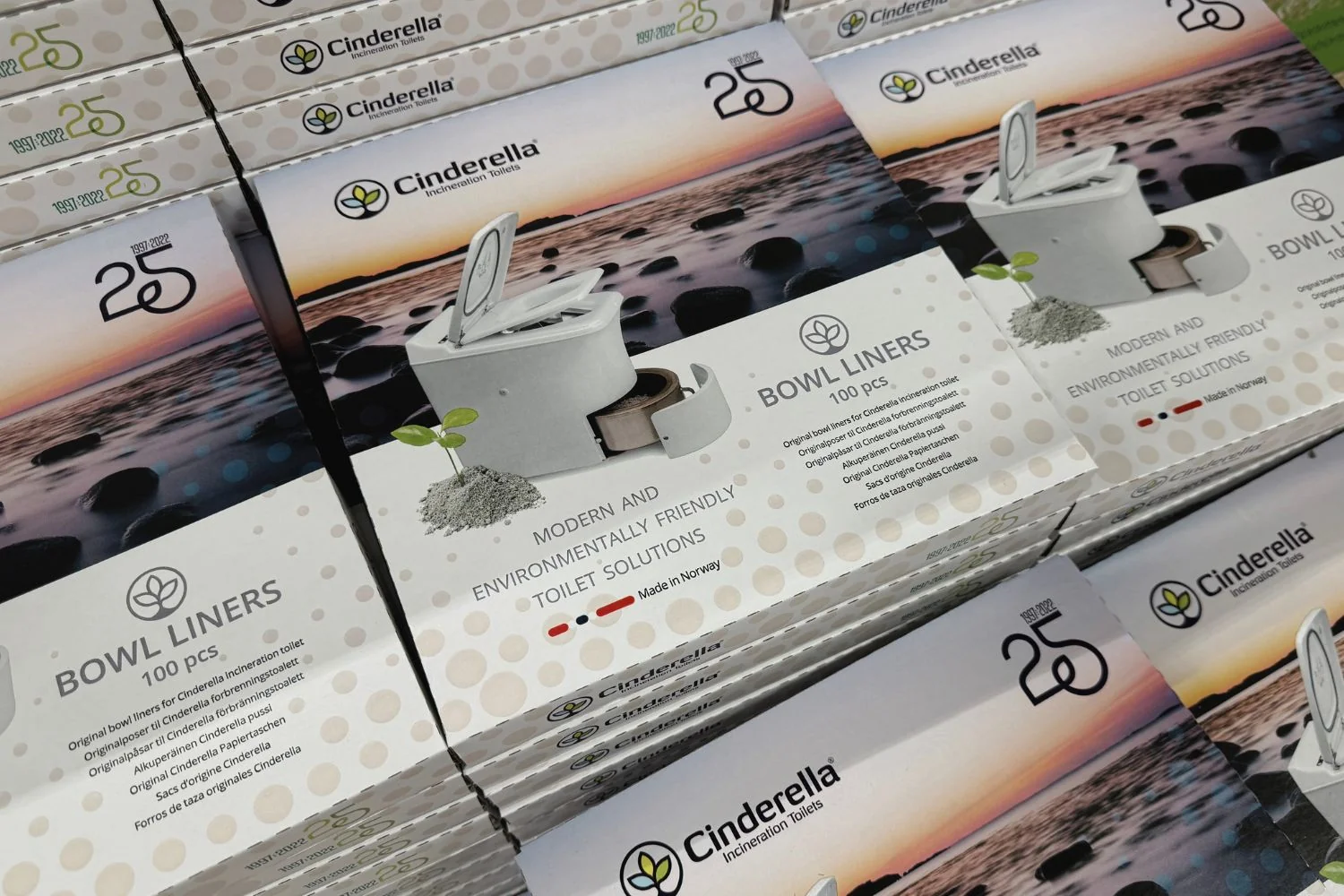
What are the Cinderella liners made of?
Cinderella bowl liners are manufactured at Cinderella Eco Group’s facility in Lyngen, Norway. They are designed specifically for use with Cinderella incineration toilets and meet strict standards for quality, environmental responsibility, and functionality.
Materials Used:
- Outer Layer: Unbleached brown kraft paper sourced from Mondi Group in Sweden, a leader in sustainable paper production
- Inner Coating: A thin layer of LDPE (low-density polyethylene) plastic film to ensure moisture resistance and safe waste transport
This combination ensures the liners are waterproof, environmentally conscious, and fully incinerable—leaving no solid residue behind.